How Rewards Drive Spending
🧠 Use moral licensing to sell indulgent rewards, then see how shoppers prefer debit and cash

Hey there 🧠
Ready for another day of staying ahead of the competition in the Growth race?
Oh and before we go ahead! If your friend sent this to you, be sure to subscribe here! So you don’t miss out on any editions.
Partnership with Lindy
You are not behind on ideas. You are behind on speed.
You know the drill. Competitor research scattered across tabs, unfinished messaging docs, late briefs, and creative that misses the angle. That chaos is not annoying, it is expensive.
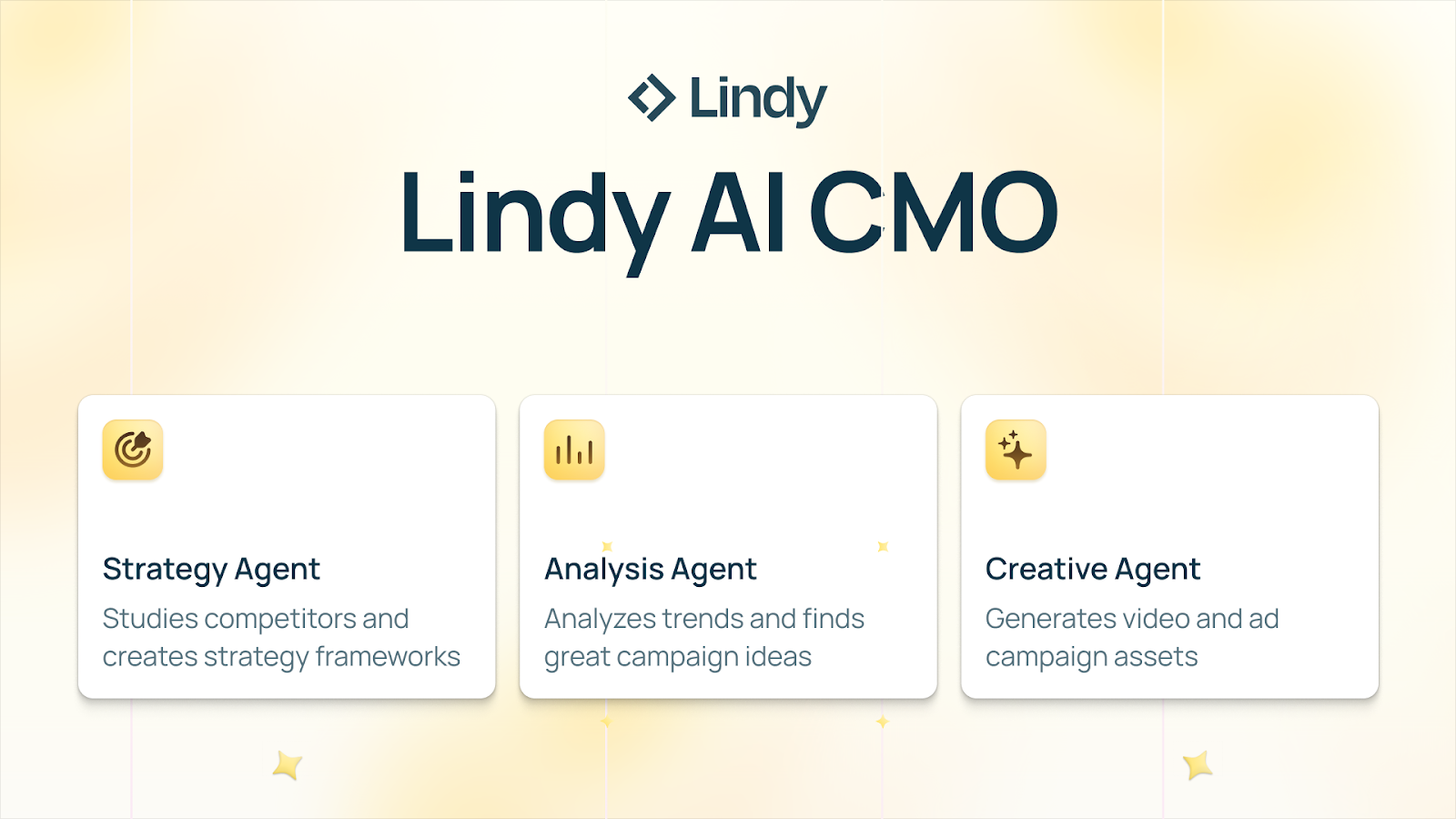
Lindy AI CMO is a suite of powerful agents that ship beautiful marketing campaigns quickly.
Drop in your website, and agents study your competitors, extract angles, draft messaging, create briefs, and generate launch-ready assets, then organise everything in Airtable for a clean approval flow.
- Cut campaign prep from 10 to 14 days down to 1 to 2 days.
- Generate 30 to 80 on-brief variants per angle to accelerate testing.
- Reduce rework and increase weekly experiment volume without extra headcount.
Teams running agent-led workflows consistently ship 2 to 3 times more weekly tests with the same headcount.
💡 Moral Licensing and How Marketers Can Use It
Moral licensing is the mental shortcut where people use a good action to justify a later indulgence. Do something virtuous, and the brain treats it like earning credits. Those credits then get spent on something less virtuous, because they feel deserved.
Researchers have shown this effect in real behavior. In one study by Monin and Miller, participants who first proved they were not prejudiced were more likely to make biased choices afterward. The good deed became permission to slip.
For marketers, this bias can be a powerful conversion lever when used responsibly.
1️⃣ Pair a Virtue With a Vice: Link a disciplined action to an indulgent reward. Starbucks Rewards is a classic example. Customers build “good behavior” by being loyal and earning points. Then they redeem those points for a treat they might not normally justify. The reward feels earned, so spending feels easier.What to do: Create systems where users earn points through positive actions and can redeem them for premium treats or upgrades.
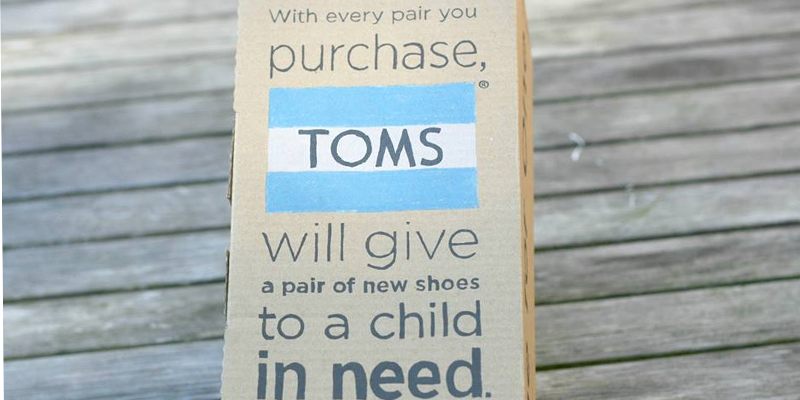
2️⃣ Frame the Purchase as Inherently Good:Buying often triggers guilt. But if you attach a social impact element, the purchase feels virtuous instead of selfish. Tom’s popularized this with Buy One Give One, turning spending into an act of giving. The customer feels morally boosted, which makes additional purchases easier to justify.What to do: Tie your product to a meaningful cause and make the impact clear. Ensure the mission is genuine, or trust can collapse fast.
3️⃣ Use Language That Grants Permission:Sometimes the simplest lever is messaging. Phrases like “You earned it” and “You deserve this” activate the feeling of moral credit. L’Oreal built a famous line around this idea by framing indulgence as deserved self-worth.What to do: Use earned language after milestones, achievements, or positive behaviors, then present the upgrade or reward.
The Takeaway
Moral licensing works because people want to feel good about indulgence. Help customers earn, justify, or earn permission for their reward, and buying becomes emotionally easier. Done right, it increases conversions while making customers feel satisfied with the decision.
💡 How Users Prefer to Pay for Christmas Gifts
With Apple Pay, wallets, and BNPL everywhere, you might expect holiday shoppers to be all-in on modern financing. But the data shows something more cautious. When buying gifts, consumers prefer familiar payment methods and want to avoid debt.
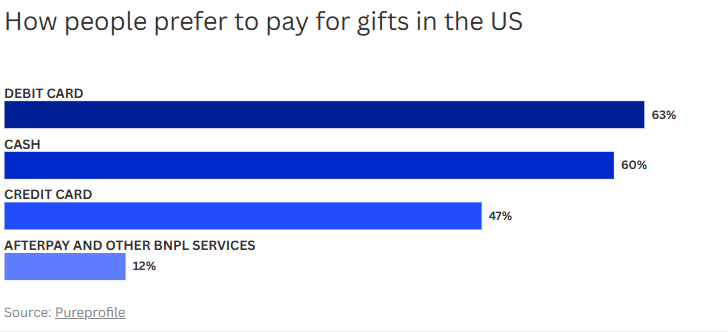
1️⃣ Debit and Cash Still Lead: Debit cards are the top choice at 63 per cent, with cash close behind at 60 per cent. That pairing suggests many shoppers want spending to feel immediate and controlled. They want to buy gifts without opening a new tab in their financial life.
2️⃣ Credit Cards Are Not the Default: Credit cards sit at 47 per cent, well behind debit and cash. Even though credit offers rewards and convenience, many shoppers appear to be limiting how much holiday spending they put on credit.
3️⃣ BNPL Is Not the Holiday Favorite: Despite major Buy Now Pay Later promotions during Cyber Week, only 12 per cent of consumers prefer services like Afterpay for gift purchases. The message is clear: people are trying to avoid the January bill shock and are choosing to spend money they already have.
4️⃣ What This Means for Marketers: Holiday buyers are shopping cautiously. The lower demand for BNPL signals debt aversion and a desire for financial control. That changes what drives trust and conversion on your checkout page.
5️⃣ What to Do Next: Offer BNPL, but do not position it as your main conversion lever. Instead, focus on making debit feel safe and seamless. Display trust badges and secure payment icons prominently, and reduce friction in the pay-and-finish checkout experience.
The Takeaway
Holiday shoppers want to buy gifts without debt. Debit and cash dominate, while BNPL remains a niche preference. Build checkout experiences around security, simplicity, and trust, and you will meet customers where their mindset is right now.
As we prepare more "Growthful" content, we'd love to hear your thoughts on today's edition! Feel free to share this with someone who would appreciate it. 🥰