Insults can boost CTR
🎯 Turning brand insults into higher CTR ads, then why AI search rivals traditional search

Hey there 🧠
Ready for another day of staying ahead of the competition in the Growth race?
Oh and before we go ahead! If your friend sent this to you, be sure to subscribe here! So you don’t miss out on any editions.
Partnership with Fullcart
Your data knows what’s wrong, you just can’t see it.
You already have Shopify, Meta, and Klaviyo, but none of them talk to each other. So you waste nights trying to figure out why ROAS dipped or which ad is quietly burning cash. By the time you find the answer, the damage is already done.
Fullcart is the AI Operator that brings your data, ads, and ops together into one intelligent system that analyzes, answers, and fixes what’s broken before you notice.
📊 Connect Shopify, Meta, and Klaviyo to see every metric in one clean, real-time dashboard. 🤖 Ask anything like “Which campaign drives repeat buyers?” and get instant, analyst-grade answers. ⚙️ Automate ops to pause bad ads, sync inventory, or issue refunds without leaving your screen. 💡 Top teams save 8+ hours a week and make faster, higher-margin decisions.
Imagine waking up to one dashboard that knows what’s breaking, why, and how to fix it before you do. That’s Fullcart.
Try Fullcart free today and see how your data can finally start working for you!
💡 Want a Better CTR? Turn Insults Into Ads
Negative comments usually trigger panic. Apologies get drafted. Comments get deleted. Damage control kicks in.
But research suggests that criticism, when handled the right way, can actually increase performance.
Sometimes the roast is the strategy.
1️⃣ Criticism Can Outperform Defense: University researchers found that brands leaning into insults often see better results than brands that deny or explain them away. When an electronics retailer was mocked as a “birdbrain store,” they did not issue a serious response. Instead, they ran ads showing birds running the shop. Those ads delivered a 26.7% higher click-through rate than ads that tried to refute the insult.
2️⃣ Humor Signals Confidence: MTV faced criticism for being overly dramatic. Instead of pushing back, they embraced it. By owning the accusation, the brand was perceived as 70.5% funnier and 25% more interesting compared to when it tried to defend itself. When a brand laughs at itself, it feels secure. That confidence makes audiences more comfortable engaging.
3️⃣ Breaking Corporate Expectations Works: People expect brands to respond with polished statements and careful language. Humor breaks that pattern. Turning a rude comment into an ad, a post, or even merchandise feels human and unexpected. It shows the brand is not fragile or overly protective of its image.
4️⃣ Likability Comes From Self-Assurance: When brands repurpose bad reviews or insults, they signal that their identity is strong enough to handle jokes. That self-assurance often translates into higher likability and engagement, because audiences enjoy brands that do not take themselves too seriously.
5️⃣ Know Where The Line Is: This approach is not risk-free. It backfires if you punch down or mock criticism from vulnerable individuals. It also fails if the complaint is legitimate. Turning real product issues into jokes does not look confident. It looks careless. If someone flags a serious problem, fix it first. Humor is for unfair or irrelevant insults only.
The Takeaway
Not every insult needs a rebuttal. Some deserve a punchline. When done thoughtfully, embracing criticism can increase attention, boost CTR, and make your brand feel more human. Just make sure you are laughing with your audience, not at them.
💡 AI Search vs Traditional Search: It’s Closer Than You’d Think
Insights from stackedmarketer
AI search is often framed as the challenger. Traditional search is the incumbent. Humans versus machines.
But user trust data tells a more nuanced story.
When people compare generative AI answers with organic search results, the gap is surprisingly small. About 43% of users trust AI and traditional search exactly the same.
In some cases, AI already has the edge.
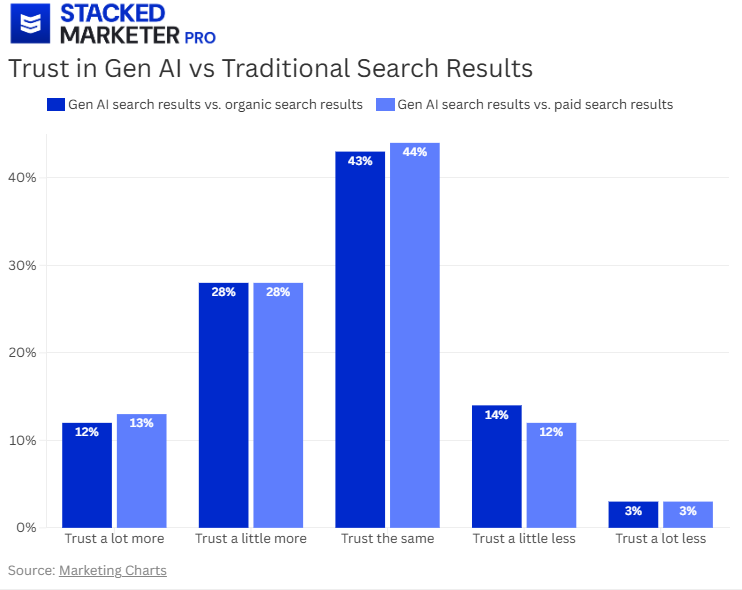
1️⃣ AI Trust Is Rising Faster Than Expected: Around 28% of users say they trust generative AI more than organic search results. Another 28% trust AI more than paid search. Only a small minority says they trust AI less. That suggests skepticism exists, but it is no longer dominant.
2️⃣ The Black Box Feels Cleaner Than The Bazaar: Traditional search has become crowded with ads, affiliate pages, and SEO driven content designed to rank rather than help. Many users now see AI answers as more direct and less commercially polluted. Even though AI is a black box, it feels simpler and more honest compared to scrolling through pages of optimized results.
3️⃣ Direct Answers Feel Like Transparency: AI removes the need to click, compare, and decode intent. It gives one synthesized answer. For many users, that directness is interpreted as clarity, even with the known risk of hallucinations. Fewer steps feel like less manipulation.
4️⃣ Optimization Is Shifting From Pages To Answers: As trust in AI responses grows, visibility depends less on ranking links and more on being cited as the source. This is where Answer Engine Optimization comes in. Structuring content in clear question and answer formats, using concise explanations and scannable points, makes it easier for AI systems to extract and reference your information.
The Takeaway
AI search is not replacing traditional search overnight. But in the minds of users, it is already standing beside it. Brands that want to stay visible should start thinking beyond rankings and toward answers. If AI is becoming the interface, your content needs to be the solution it chooses to surface.
As we prepare more "Growthful" content, we'd love to hear your thoughts on today's edition! Feel free to share this with someone who would appreciate it. 🥰