Measure Customer Stickiness
🧠 Understand what keeps customers loyal, and automate SEO/AEO insights with AI

Hey there 🧠
Ready for another day of staying ahead of the competition in the Growth race?
Oh and before we go ahead! If your friend sent this to you, be sure to subscribe here! So you don’t miss out on any editions.
Partnership with Insense
Turn One Creator Drop Into Weeks of Q5 Ads
This is the week where every ad starts dying at the same time, and teams scramble for anything new to ship. Doing nothing means pouring budget into creatives that stopped converting yesterday.
This is exactly where Insense saves you. You get fast, affordable UGC at the volume Q5 demands without blowing up your team’s bandwidth.
- 20+ raw assets from each creator you can spin into dozens of variations.
- 14-day turnaround so you never fall behind rising CPMs.
- Lifetime usage rights, so every winning cut keeps earning for months.
- Cost-efficient sourcing that lets you test aggressively
Over 2,000+ brands like Quip, Revolut, and Matys use Insense for one reason: it keeps creative supply high when everything else slows down.
Imagine finishing Q5 with a full folder of fresh ads ready to deploy instead of praying old winners magically revive.
Book a free strategy call by December 12th and get $200 for your first campaign!
💡 How to Measure Customer Stickiness
Customer stickiness is your ability to keep customers coming back because your product, experience, and value consistently beat alternatives. Shopify’s team highlights the key metrics that reveal whether your customers are truly loyal or just passing through.
1️⃣ Net Promoter Score (NPS): NPS measures satisfaction and advocacy by asking how likely customers are to recommend you on a 0 to 10 scale.
• Detractors: 0 to 6
• Passives: 7 to 8
• Promoters: 9 to 10
How to calculate: NPS = percentage of promoters minus percentage of detractors. This shows whether customers are excited about your brand or quietly unhappy.
2️⃣ Customer Retention Rate (CRR): CRR tells you how well you keep customers over a period, factoring in loyalty and repeat behaviour.
How to calculate: (Customers at the end of the period minus new customers) divided by customers at the start of the period. Track it against industry benchmarks to understand whether you are improving or falling behind.
3️⃣ DAU to MAU Ratio: This metric shows how habitual your product is, especially for SaaS and apps.
How to calculate: DAU divided by MAU. A higher ratio means people return frequently, and your product fits into daily routines rather than occasional use.
4️⃣ Customer Lifetime Value (CLV): CLV estimates how much revenue one customer brings over the full relationship. This guides acquisition budgets and long-term planning. A common approach is average order value multiplied by purchase frequency multiplied by customer lifespan. When CLV rises, your business gains more room to spend and scale.
5️⃣ Customer Churn Rate: Churn measures the percentage of customers who stop buying or cancel.
How to calculate: Customers lost during the period divided by customers at the startIf churn is rising, your stickiness is weakening, and you need to identify where customers are dropping off.
The Takeaway
Stickiness is not a vibe. It is measurable. Track NPS, retention, DAU to MAU, CLV, and churn to see if customers truly value your product. Then improve the experience, strengthen support, personalize marketing, and reward loyal users to keep them coming back.
💡 How to Create an SEO and AEO Agent for Your Business
If search is shifting toward AI answers, you need a system that can continuously monitor performance, learn your brand, and recommend what to publish next. With Searchable, you can build an SEO and AEO agent trained on your data, competitors, and goals.
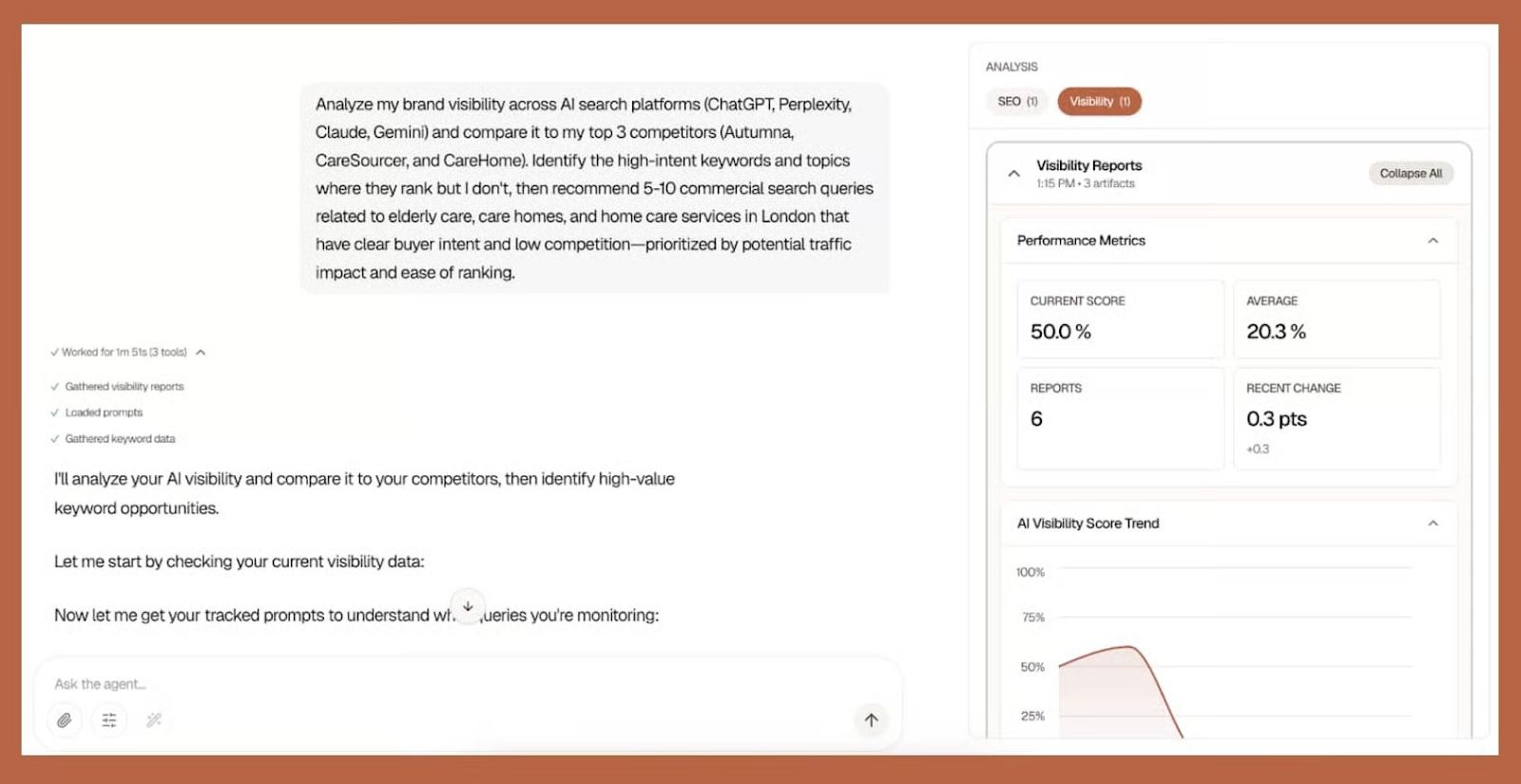
1️⃣ Onboard to Searchable: Create your Searchable account and complete setup. This becomes your base for building an agent that can work from real performance signals instead of generic SEO advice.
2️⃣ Add Your Competitors: Input your top competitors so the agent can benchmark your visibility, identify gaps, and spot opportunities they are capturing that you are missing.
3️⃣ Connect Your Core Data Sources: Go to Account → Manage Account → Integrations and connect:
• Google Search Console
• Google Analytics
These integrations give your agent accurate context on queries, pages, traffic patterns, and user behaviour.
4️⃣ Create Prompts for Your Agent: Go to Prompts → Your Prompts → Create Prompts and build reusable instructions that reflect your goals and how you want the agent to think. These prompts help shape strategy, content planning, and optimisation decisions with consistency.
5️⃣ Ask the Agent for New Opportunities: Once your data and competitors are connected, ask for actionable next steps. Example prompt: “Analyze my Google Search Console, analytics, and competitors. Tell me what additional prompts and topics I should target to appear for.”
6️⃣ Use the Agent to Build Strategy and Grow Traffic: Ask the agent to research keywords, map content priorities, and recommend improvements that increase ranking and visibility in both traditional search and AI-driven discovery. Since it’s trained on your brand now, the ideas will be more specific, aligned, and usable.
The Takeaway
An SEO and AEO agent only works if it has real context. Once you connect Search Console, analytics, and competitor benchmarks, your agent can spot opportunities faster and guide content decisions that improve traffic and AI visibility over time.
As we prepare more "Growthful" content, we'd love to hear your thoughts on today's edition! Feel free to share this with someone who would appreciate it. 🥰