Perfect Your Thread Structure
🧵 Learn to craft high-impact threads, then uncover why fast websites still frustrate users

Hey there 🧠
Ready for another day of staying ahead of the competition in the Growth race?
Oh and before we go ahead! If your friend sent this to you, be sure to subscribe here! So you don’t miss out on any editions.
Partnership with Aviron
Finally, a Treadmill you'll Actually Stick With

Meet the Aviron Victory, the only gamified treadmill designed to keep you coming back.
Powered by game psychology and industry-leading hardware, the Victory Treadmill makes working out something you actually look forward to. Whether you're racing through immersive games, streaming your favorite shows, or jumping into coach-led classes, it’s fitness that fits your life and makes it easier to stay consistent.
Why Victory is a Game-Changer:
- Game-powered workouts that keep you engaged
- 1,000+ options across cardio, strength, and recovery
- Built-in streaming: Netflix, HBO Max, YouTube, and more
- Comfort-first design for all fitness levels
Use code VICTORY50 for an additional $50 off and start your 30-day risk-free trial!
💡 How to Craft High-Performing Threads on X and Threads
Long-form social posts like threads on X and Threads offer more room to educate, persuade, and entertain. When built strategically, they hook scrollers, boost engagement, and outperform standalone posts. Neal Schaffer breaks down what separates average threads from top-tier ones.
1️⃣ Start With Clear Intent: Before writing anything, define your goal, pinpoint your audience, and choose the angle you want to take. Do quick research, gather supporting material, and map out the structure so your thread flows smoothly from start to finish.
2️⃣ Craft a Strong Hook: Your first post determines whether anyone keeps reading. Pair curiosity with value using bold claims, surprising stats, or provocative questions. The hook must promise something compelling enough to pull readers deeper into the thread.
3️⃣ Build a Clear, Valuable Body: Deliver on your hook through a logical sequence where each tweet communicates one key idea. Ensure every post stands alone yet contributes to the broader message. Keep formatting consistent, use short paragraphs, and support the content with charts, screenshots, or short videos. For best readability, keep threads to 5–7 posts and number them clearly.
4️⃣ End With One Focused CTA: A great thread always guides the reader toward an action. Close with a single, meaningful CTA that aligns with your goal, such as joining your newsletter, answering a question, downloading a resource, or visiting a link.
5️⃣ Strengthen With Brand Consistency: Use consistent visuals, colors, or templates so your content is instantly recognizable. Apply visual hierarchy to highlight key points and make scanning effortless.
6️⃣ Track the Right Metrics: Monitor visibility, engagement rate, estimated completion rate, CTR, and conversions. Use UTM tags to understand which posts drive action. A/B test individual components such as hooks or visuals and compare results after at least 48 hours.
The Takeaway
Threads excel at breaking down complex ideas into digestible, scroll-friendly content. When you apply intentional structure, strong hooks, clear visuals, and data-driven refinement, your threads will outperform ordinary posts and keep readers engaged from start to finish.
💡 Websites Are Getting Faster, But User Experience Is Getting Worse Insights from stackedmarketer
The internet is speeding up. Pages load quicker, interactions feel smoother, and performance metrics are trending in the right direction. But at the same time, users are getting more confused, more frustrated, and more likely to rage-click their screens into oblivion. Speed is improving, but usability is slipping.
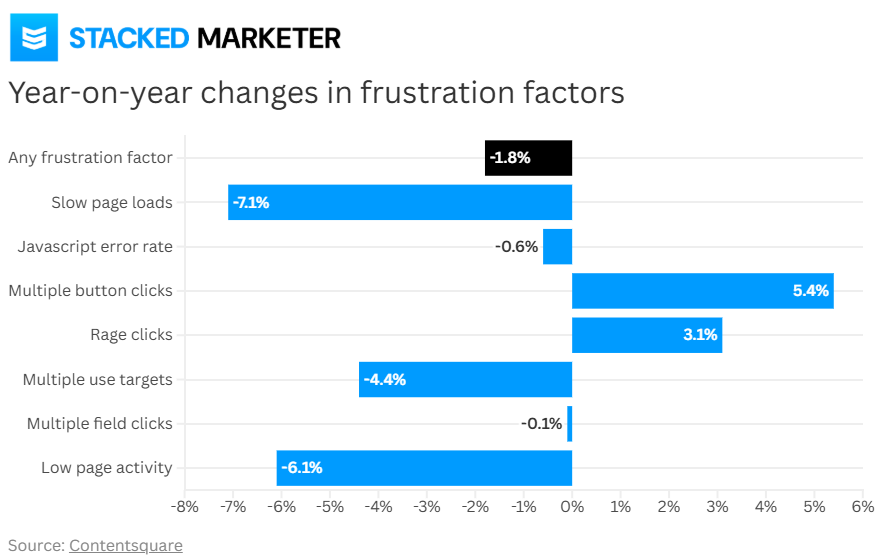
1️⃣ The Good News: Recent data shows meaningful improvements in core performance metrics: • Slow page loads dropped by 7.1 percent year over year. • Low page activity declined by 6.1 percent. • Overall user frustration dipped by 1.8 percent. On paper, everything looks like it’s headed in the right direction.
2️⃣ The Bad News: User experience tells a different story. • Multiple button clicks rose 5.4 percent. • Rage clicks increased 3.1 percent.This means users are interacting more aggressively because the interface is unclear, broken, or not doing what they expect.
3️⃣ Why It’s Happening: In the race to optimize for speed, teams have adopted new frameworks, layers, and visual elements. While they reduce load times, they often introduce confusing layouts, unclear CTAs, or inconsistent interactions. It’s like upgrading the engine while forgetting to fix the door handles.
4️⃣ The Crew’s Take: We’re winning the speed race but losing the usability war. Faster pages don’t matter if users can’t figure out where to click, how to navigate, or how to complete the action they came for. Rising rage clicks are direct symptoms of UX friction that performance fixes alone cannot solve.
5️⃣ What To Do Next: Don’t just monitor load times. Actively audit your user experience. Watch session recordings to understand real behavior. Filter specifically for “rage click” events. These hotspots reveal confusing UI elements like dead buttons, misleading icons, or hard-to-find navigation. Fix those, and frustration drops fast.
The Takeaway
Speed makes a site functional, but usability makes it successful. If you want happier users and higher conversions, pair performance optimization with continuous UX auditing. The fastest sites win attention, but the clearest sites win customers.
As we prepare more "Growthful" content, we'd love to hear your thoughts on today's edition! Feel free to share this with someone who would appreciate it. 🥰