The Hot Hand Effect
🎯 Drive action with hot hand behavior, and see where boomers actually research

Hey there 🧠
Ready for another day of staying ahead of the competition in the Growth race?
Oh and before we go ahead! If your friend sent this to you, be sure to subscribe here! So you don’t miss out on any editions.
Partnership with Cloudways
This Holiday Season, Fix the Slowest Part of Your Funnel

You’ve seen it: campaigns look strong on paper, but conversions dip because the site gets a little slower under real traffic. Most teams don’t catch it until the numbers are already cooked.
Cloudways is the easiest upgrade because it gives you real cloud performance without touching DevOps.
• Built on a fast NGINX stack that keeps pages snappy under pressure
• Deploy on DigitalOcean, AWS, or Google Cloud with pay-as-you-go control
• Unlimited WordPress, PHP, Magento, or Laravel sites without server headaches
• Copilot + 24/7 experts handle maintenance so you stay focused on scaling
100,000+ businesses use Cloudways because the lift shows up instantly: faster TTFB, cleaner checkouts, and campaign performance that finally reflects what you paid for.
Imagine a holiday season with zero infrastructure anxiety, pages load instantly, traffic spikes don’t faze you, and your ROAS lives up to the deck.
If you’re tightening your stack, the 50% off for 3 months + 50 free migrations with code BFCM5050 is the easiest win you’ll grab this Q4.
Claim Your Cloudways BFCM Offer Today!
💡 The Hot Hand Effect and How Marketers Can Use It
The Hot Hand Effect describes how people mistake random streaks for meaningful patterns. When someone succeeds several times in a row, we assume they are more likely to succeed again, even when the probability has not changed.
Originally studied in 1985 by Gilovich, Tversky, and Vallone, the effect explains why a player draining three shots in a row feels unstoppable even though each shot is independent.
1️⃣ What the Hot Hand Effect Is: Our minds misinterpret clusters of random success as a pattern. This shows up far beyond sports. A rising stock looks invincible until it isn’t. A slot machine feels “hot” right before it wipes out your money. A few great business months trick you into believing your performance will continue. The human brain sees streaks and assumes future success is more likely.
2️⃣ Show Real Time Momentum: People like to support what appears to be winning. That is why e-commerce sites highlight trends like “sold 50 in the last hour” or “23 people are viewing this property.” Booking information and real-time activity signals create a sense of a product being “hot right now.” This taps directly into the Hot Hand Effect and boosts engagement and conversions.
3️⃣ Highlight Recent Positive Reviews: Customers look at freshness before volume. Amazon’s “Most recent reviews” filter creates a feeling of momentum when several high ratings appear close together. Five recent five-star reviews feel like a streak, not separate opinions. Brands can use this by encouraging reviews in bursts and featuring fresh wins prominently.
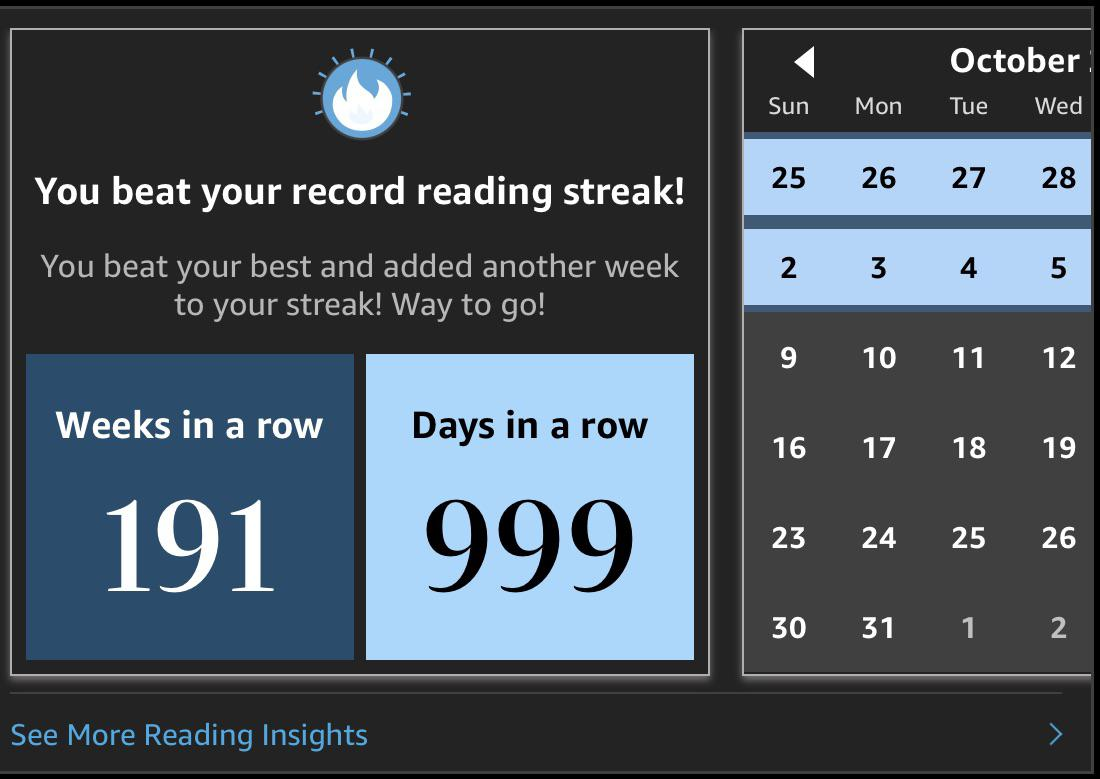
4️⃣ Use Streak-Based Motivation: Duolingo’s streak feature is one of the best examples. Users feel like they are on a roll and become motivated not to break the streak. Kindle’s reading streak works similarly and leads to more reading and more book purchases. Any brand can use streak-based rewards or messaging in loyalty programs, learning platforms, fitness apps, or subscription models.
The Takeaway
The Hot Hand Effect is an illusion, but a powerful one. By showing momentum, surfacing recent wins, and building streak-based engagement, marketers can tap into human psychology to increase confidence, create habits, and drive more consistent conversions.
💡 Boomers Are Not Turning to Social Media for Product Research Insights from stackedmarketer
Younger consumers treat social platforms like research engines, but boomers are not following that trend. While Millennials and Gen Z gather product insights from TikTok, Instagram, and YouTube, older audiences still rely on more traditional sources.
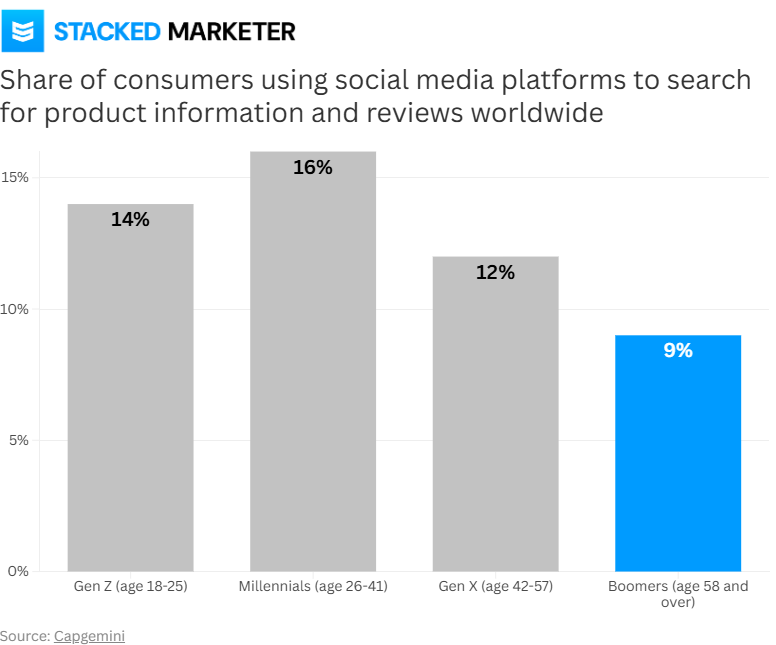
1️⃣ Who Uses Social Media for Research: Recent data shows a clear generational divide: • Millennials aged 26 to 41 lead with 16 percent using social platforms for product research • Gen Z, aged 18 to 25, follows closely at 14 percent • Boomers aged 58 and older sit at the bottom with only 9 percent relying on social media for research Boomers simply are not using their feeds to evaluate brands or products.
2️⃣ Why Boomers Rely on Traditional Sources: Boomers did not grow up trusting social feeds for reliable information. For them, TikTok is entertainment, not due diligence. They depend on Google searches, independent review sites, and official brand websites when researching a purchase. Credibility matters more than trends.
3️⃣ What Marketers Should Focus On: If boomers are part of your audience, your website and search presence need to do the heavy lifting. Your Instagram carousel will not drive their decision-making, but strong on-site content will. Invest in: • Comprehensive product pages • SEO that helps you show up in high-intent searches • Credible third-party reviews These are the touchpoints where boomers form opinions and choose what to buy.
The Takeaway
Younger shoppers research on social platforms. Boomers do not. To win this segment, prioritize your website, search visibility, and verified reviews. Social media may drive awareness, but traditional research channels close the sale for older audiences.
As we prepare more "Growthful" content, we'd love to hear your thoughts on today's edition! Feel free to share this with someone who would appreciate it. 🥰